
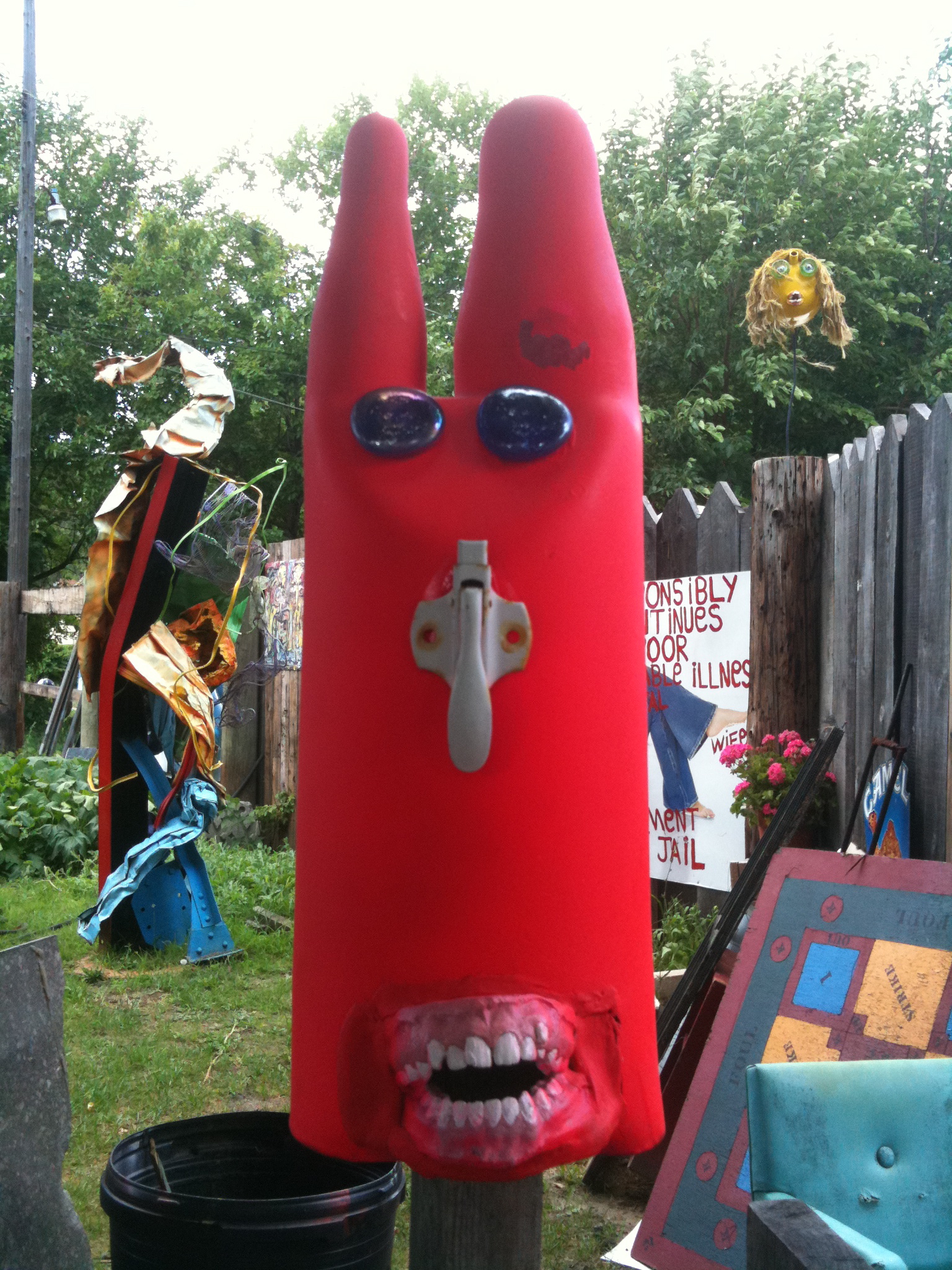
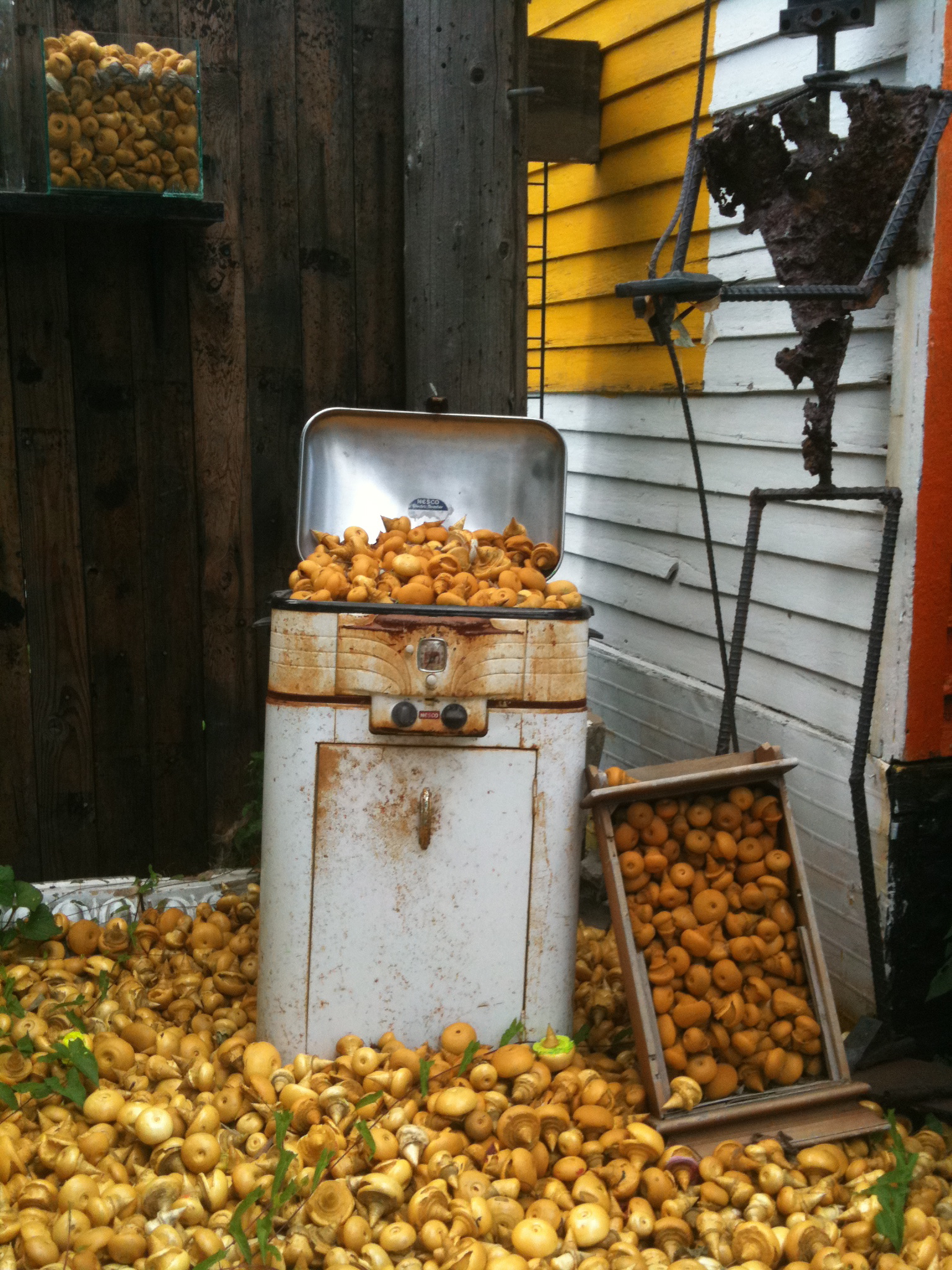
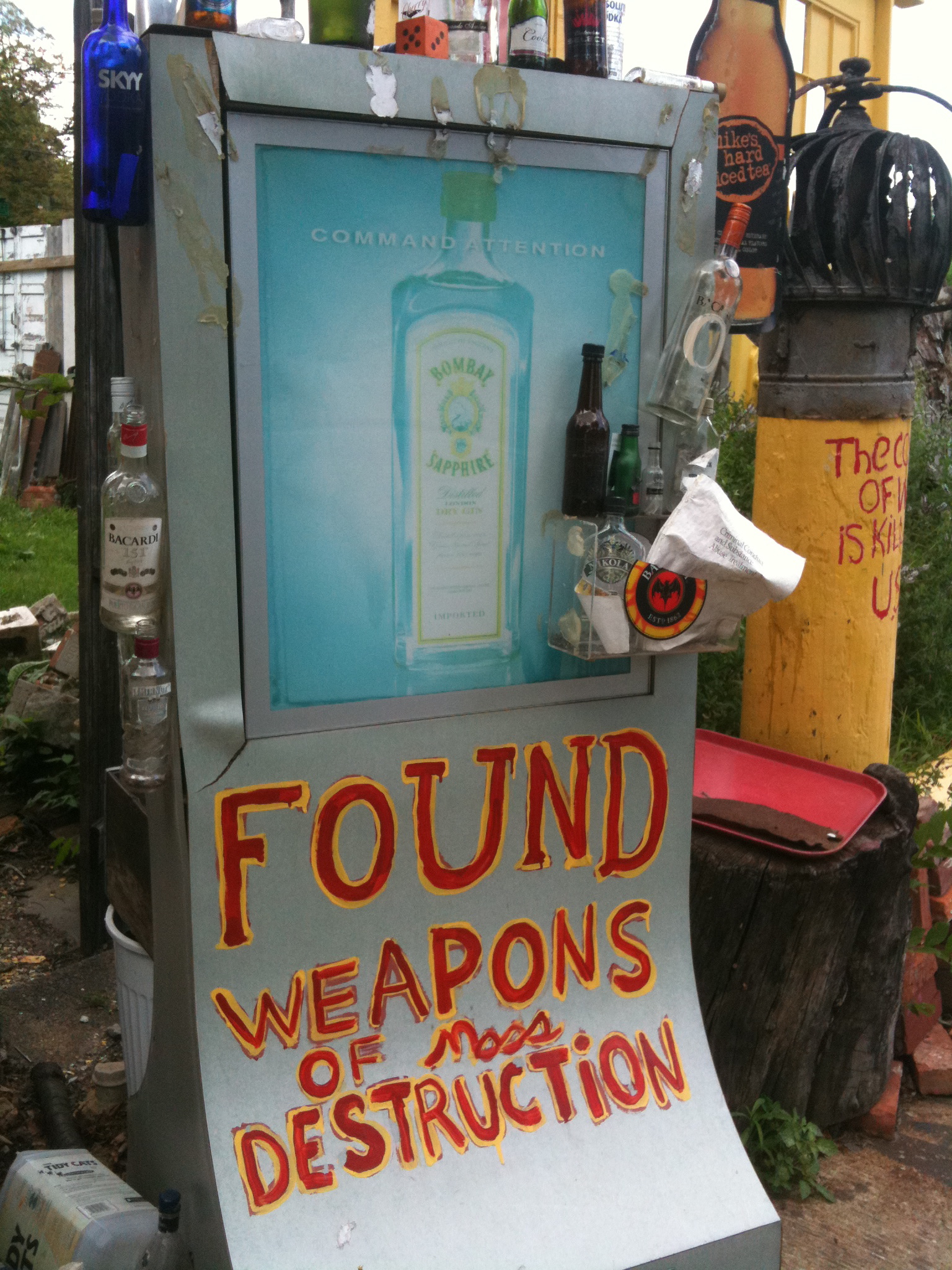
If Detroit has any tourist destinations, Heidelberg is one. What began as an attempt to address the socio-geographic reality of Detroit through artistic means has since become a cultural commodity. In 1986 Tyree Guyton chose to comment on the ever increasing racial segregation, abandonment, and poverty that characterized his street (Heidelberg) for over 18 years.

By 1988, the project began receiving positive national media recognition. Attention was accentuated when then mayor of Detroit, Coleman Young, tried to tear it down. Although the project’s cultural meaning is grounded in place, Detroit, Heidelberg as a cultural ideology is exportable. Pieces of Heidelberg reside in Ecuador and Europe. Guyton has appeared on the Oprah show and is on the list of Who’s Who in Black America. There is now an Executive Director to oversee the project.
Heidelberg has become something much larger than just an abandoned street in downtown Detroit. Just as we mourn our favorite underground bands that make the cover of Vice magazine, many in Detroit complain that Heidelberg has lost its original meaning. There is a fee for inner city schools that wish to incorporate the project into the educational programming, one can buy Heidelberg merchandise, and is charged to download the map of the neighborhood surrounding the street. But that doesn’t necessarily mean it’s a sell out. Heidelberg Project is now in its 23rd year and growing. In Detroit, that is a true accomplishment. I went back to Heidelberg for the first time in many years last Saturday and was truly surprised by the number of visitors. Who were these people? How did they know about the project?
Despite the controversy, Heidelberg is public art at its best. It is an attestation to ability for humans to use whatever means necessary to understand and come to terms with the world they live in. It is an understanding that comes from the psychology of the individual, the social structures of our culture, and the geography that surrounds us.
 Utopiography
Leave a reply to morganfrances Cancel reply